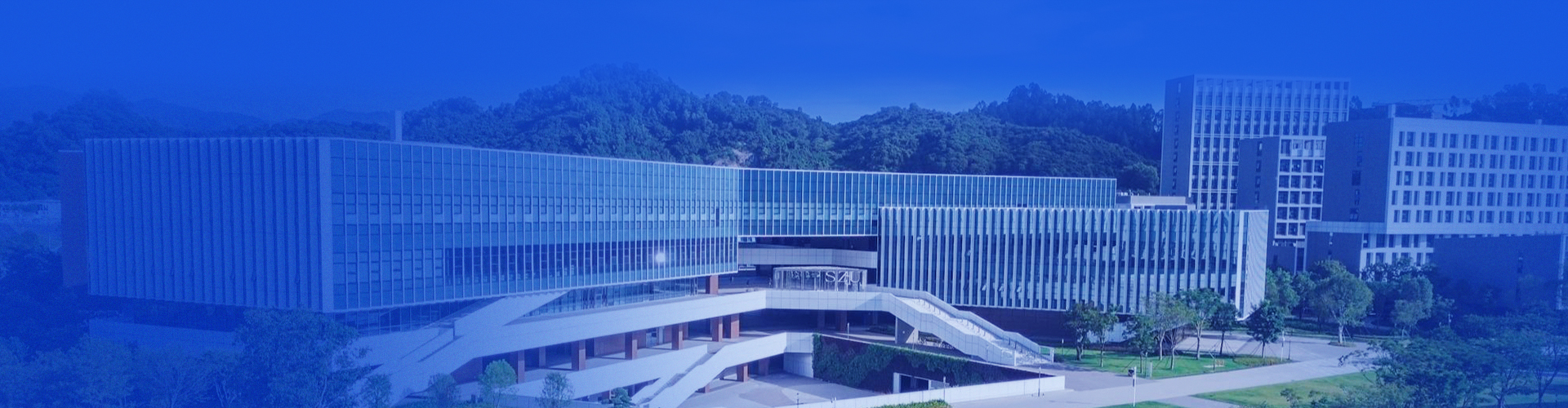
To explore innovative pathways integrating industry, academia, and research, and to help IEEE Honors Class students understand industry needs and career development directions, while broadening their international academic horizons and professional networks, the National Engineering Laboratory for Big Data System Computing Technology at Shenzhen University hosted a symposium on "IEEE Honors Class - Industry-Academia-Research Cooperation and Personal Development Prospects" on December 4, 2024. The symposium, moderated by Associate Professor Peng Xiaogang and Distinguished Research Fellow Chen Jie, provided a high-level platform for IEEE Honors Class students to exchange ideas with outstanding representatives from academia and industry.
The symposium invited several distinguished guests, including Professor Kian Hsiang Low, Associate Vice-Chancellor of the National University of Singapore; Xiao Minfeng, Vice Dean of BGI Genomics Institute; Zhao Yong, Chairman and Chief Scientist of Geling Vision; and Chen Zhenyu, Director. Several doctoral graduates from the National University of Singapore participated, representing companies such as Pengcheng Laboratory, ByteDance, Huawei, the Chinese University of Hong Kong (Shenzhen), and Guangming Laboratory. In addition, student representatives from the IEEE Honors Class actively participated, jointly discussing future directions for personal development and collaborative innovation.
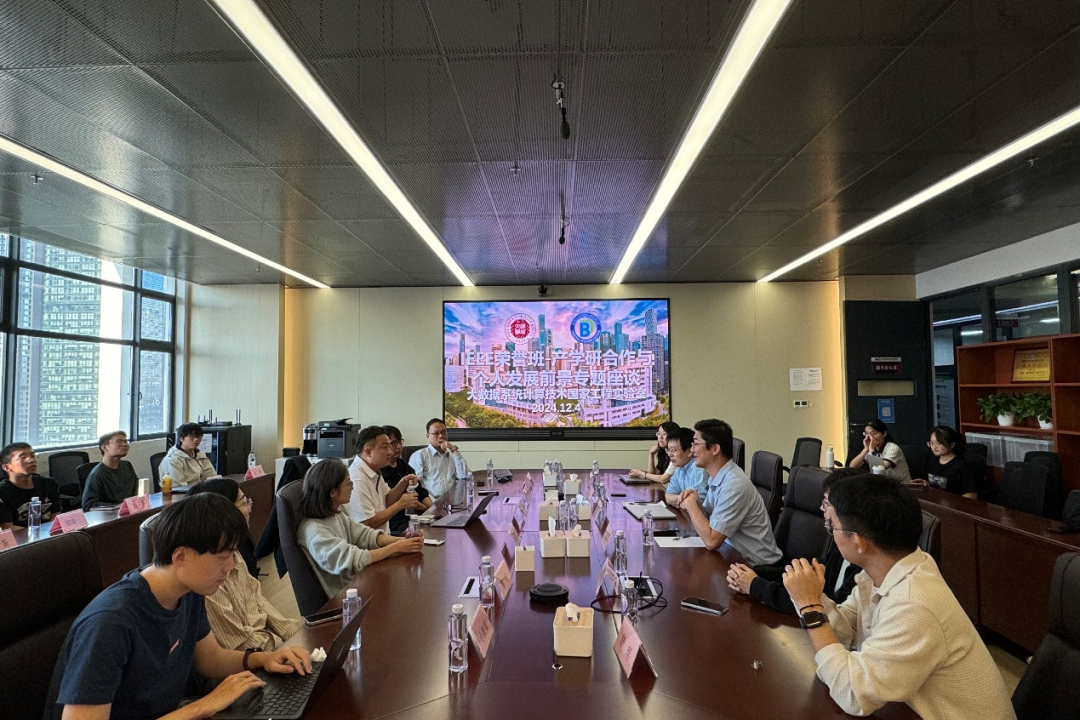
During the event, each guest speaker and a representative of doctoral graduates from the National University of Singapore (NUS) shared their unique insights and experiences, offering rich and thought-provoking content.
Professor Kian Hsiang Low, Associate Vice-Chancellor of NUS, emphasized the crucial role of industry-academia-research collaboration in driving technological innovation and economic development from a global perspective. He specifically mentioned the broad application prospects of data-driven research in the future fields of artificial intelligence and automation, and encouraged students to boldly explore interdisciplinary collaborations.
Dr. Xiao Minfeng, drawing on BGI's practices in the life sciences, shared how biotechnology, through deep integration with artificial intelligence, has achieved breakthroughs in precision medicine and health management. She encouraged students to "Be outstanding from youth."
Professor Zhao Yong, from the dual perspectives of entrepreneur and scientist, explored the opportunities and challenges facing the commercialization of artificial intelligence. He pointed out that students should continuously cultivate their strategic thinking abilities and develop practical knowledge different from that gained at school.
Dr. Chen Zhenyu specifically mentioned that young scientific and technological talents have broad development platforms in the current globalized context, but also need to possess the adaptability and collaborative abilities to cope with complex environments. Especially for Computer Science students, a "software and hardware integration" approach is crucial, with a focus on hardware-related learning.
Dr. Zhang Yehong, a representative of doctoral graduates from the National University of Singapore, shared her experiences in high-performance computing, urging students to pay attention to technical details while pursuing theoretical innovation. Dr. Yu Haibin, drawing on his experience at ByteDance, analyzed the cutting-edge applications of big data and artificial intelligence in content distribution and highlighted the industry's demand for interdisciplinary talents. Dr. Teng Tong, drawing on his R&D work at Huawei, introduced the operational model of a global R&D team and encouraged students to broaden their international perspective. Dr. Dai Zhongxiang, using the Chinese University of Hong Kong, Shenzhen as an example, elaborated on the academic community's responsibility and mission in promoting basic scientific research, as well as important considerations when applying for doctoral programs, encouraging students to boldly explore unknown fields. Dr. Shu Yao shared the research progress of the Guangming Laboratory in quantum technology and future communications, expressing boundless expectations for technological development. Dr. Chen Jie, from the perspective of Shenzhen University, introduced the IEEE program and expressed his earnest expectations for the students, encouraging them to ground themselves in practical needs and seek the intersection of academia and industry.
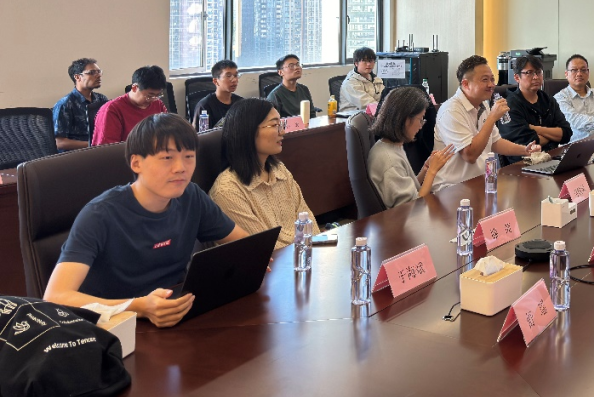
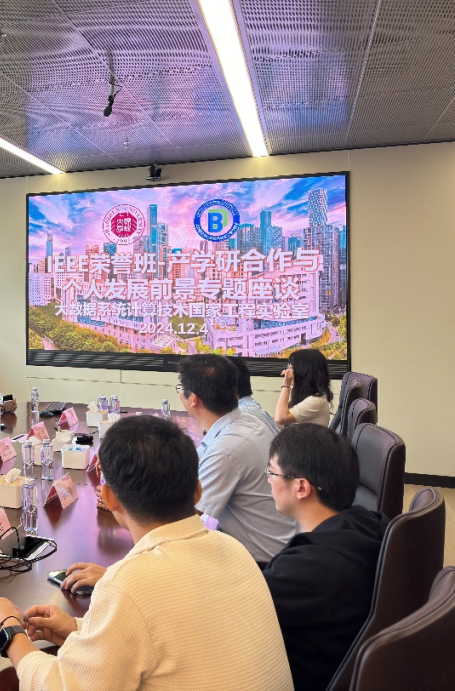
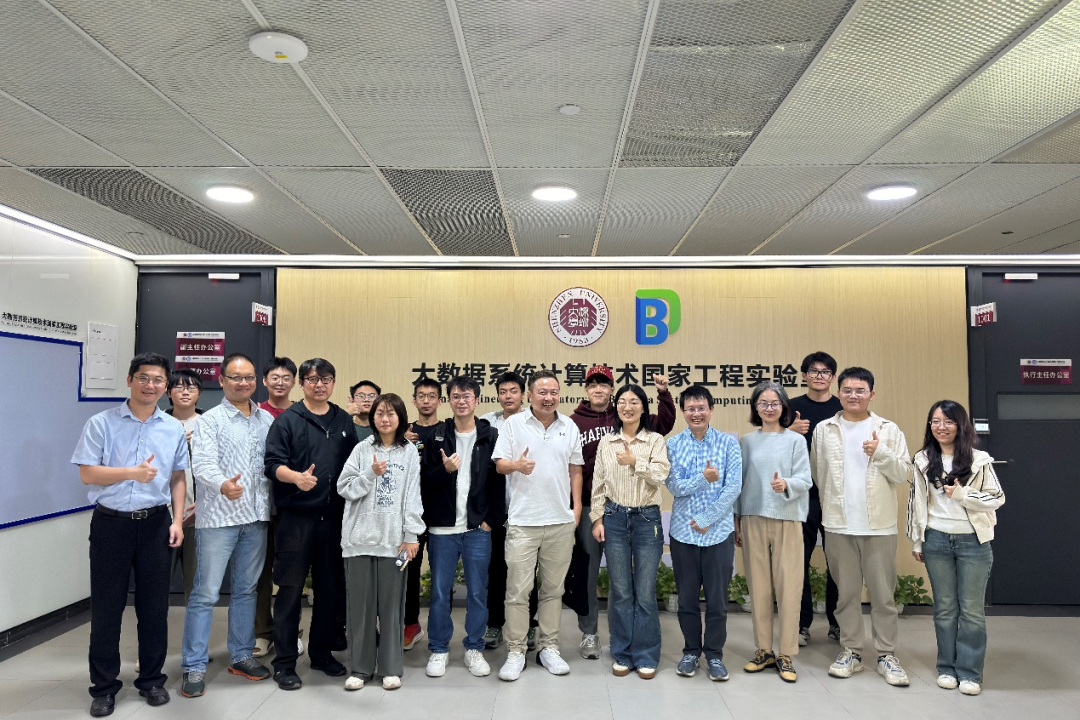
Each guest speaker and graduate's remarks not only conveyed profound industry insights but also provided highly inspiring career development advice and academic guidance for IEEE Honors students. Through this seminar, IEEE Honors students gained a deeper understanding of the vast prospects of industry-academia-research collaboration and absorbed valuable experience from both academia and industry. This seminar inspired students to plan their future with a broader perspective and accumulated valuable practical experience for promoting Shenzhen University's industry-university cooperation and international academic exchange.